Single Tooth Implant
Portland, OR
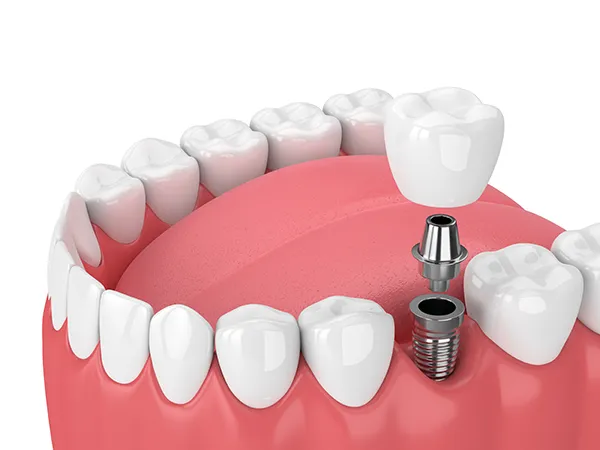
When a single tooth is missing, two of the most common permanent solutions patients are presented with are a dental implant and a fixed dental bridge. Both can restore a natural-looking tooth and reliable chewing function, but they work in fundamentally different ways, and the right choice depends on your oral health, the condition of your neighboring teeth, and what you want long term from the restoration. At East Portland Dentistry we are happy to offer both options for our patients.
How a Single Tooth Implant Works
A single tooth implant replaces the entire missing tooth, from root to crown. A titanium post is placed directly into the jawbone at the site of the missing tooth, where it gradually fuses with the surrounding bone through a process called osseointegration. Once that healing period is complete, an abutment connector is attached to the implant, followed by a custom crown designed to match the color, shape, and size of your natural teeth.
Because the implant is anchored in the bone rather than attached to nearby teeth, it functions independently. The teeth on either side of the gap are left completely untouched, and the implant continues to stimulate the jawbone with normal chewing pressure, which helps preserve bone volume at the site over time.
How a Fixed Dental Bridge Works
A traditional fixed bridge takes a different approach. Instead of replacing the tooth root, a bridge spans the gap using the two teeth adjacent to the missing tooth as support. Those neighboring teeth are reshaped and reduced in size so that crowns can be placed over them, and a false tooth, called a pontic, is fused between the two crowns to fill the gap. The entire structure is cemented in place as a single unit.
A bridge can typically be completed more quickly than an implant since it does not require a healing period for bone integration, and it does not involve a surgical procedure. For patients who are not candidates for implant surgery, or who want a faster timeline, a bridge can be a reasonable option.
The Impact on Neighboring Teeth
One of the most significant differences between the two options is what happens to the teeth next to the gap. A single tooth implant leaves those teeth completely intact, since it does not depend on them for support. A bridge, on the other hand, requires permanently altering two healthy teeth by removing a portion of the enamel so crowns can be placed over them. If those adjacent teeth were previously free of large fillings or crowns, a bridge means committing them to a lifetime of needing crown protection.
This is a meaningful consideration for many patients, particularly when the teeth next to the gap are otherwise strong and cavity-free. Preserving healthy, untouched teeth is one of the main reasons dentists often recommend an implant when a patient is a good surgical candidate.
Effect on the Jawbone
A bridge sits above the gumline and does not extend into the jawbone, so it does nothing to address the bone loss that naturally follows tooth loss. Over time, the ridge beneath a bridge can continue to shrink, sometimes leaving a visible gap between the pontic and the gum tissue that requires adjustment or replacement of the bridge down the road.
An implant, by contrast, replaces the root structure itself and continues to transmit chewing forces into the bone much like a natural tooth root would. This ongoing stimulation helps maintain the bone volume and shape of the jaw at the implant site, which also helps preserve the surrounding facial contours over the long term.
Long-Term Durability and Maintenance
With proper home care and regular dental visits, both a bridge and a single tooth implant can last many years. A bridge, however, is more dependent on the health of the two supporting teeth. If either of those teeth develops decay or a problem beneath the crown, the entire bridge may need to be removed and remade, even if the false tooth itself is in good condition.
An implant crown can also need replacement over time due to normal wear, but because the implant itself is not dependent on neighboring natural teeth, a problem with the crown typically does not put any other teeth at risk. Cleaning around an implant crown is similar to cleaning a natural tooth, while cleaning under a bridge requires a floss threader or similar tool to reach beneath the pontic, since ordinary floss cannot pass between the pontic and the gum tissue on its own.
Patients who choose a bridge should plan on this extra step becoming a permanent part of their daily hygiene routine, and should also keep in mind that the two supporting teeth will need the same ongoing attention as any other crowned tooth, including regular checkups to monitor the health of the tissue and bone underneath.
Who Is a Better Candidate for Each Option?
Several factors can make one option more suitable than the other:
| • |
Adequate jawbone volume and healthy gum tissue generally favor implant treatment
|
| • |
Existing large fillings or crowns on the adjacent teeth may make a bridge a more efficient use of those teeth
|
| • |
A preference to avoid oral surgery may lead a patient toward a bridge
|
| • |
A desire to preserve untouched, healthy neighboring teeth generally favors an implant |
Your dentist will evaluate your bone density, gum health, and overall dental history before recommending one approach over the other, and in some cases either option may be reasonable.
Making the Right Choice for Your Smile
There is no single answer that fits every patient. A single tooth implant tends to be the more conservative long-term option because it preserves neighboring teeth and maintains jawbone health, while a bridge can offer a faster, non-surgical path to restoring a missing tooth for patients who are good candidates for that approach.
If you are missing a tooth and trying to decide between these two paths, the best next step is a thorough evaluation with your dentist. At East Portland Dentistry, our dentists can review your bone volume, the condition of your adjacent teeth, and your personal goals to help you choose the option that will serve you best for years down the road. Call (971) 484-1652 to schedule a consultation and discuss which solution is right for you. |